
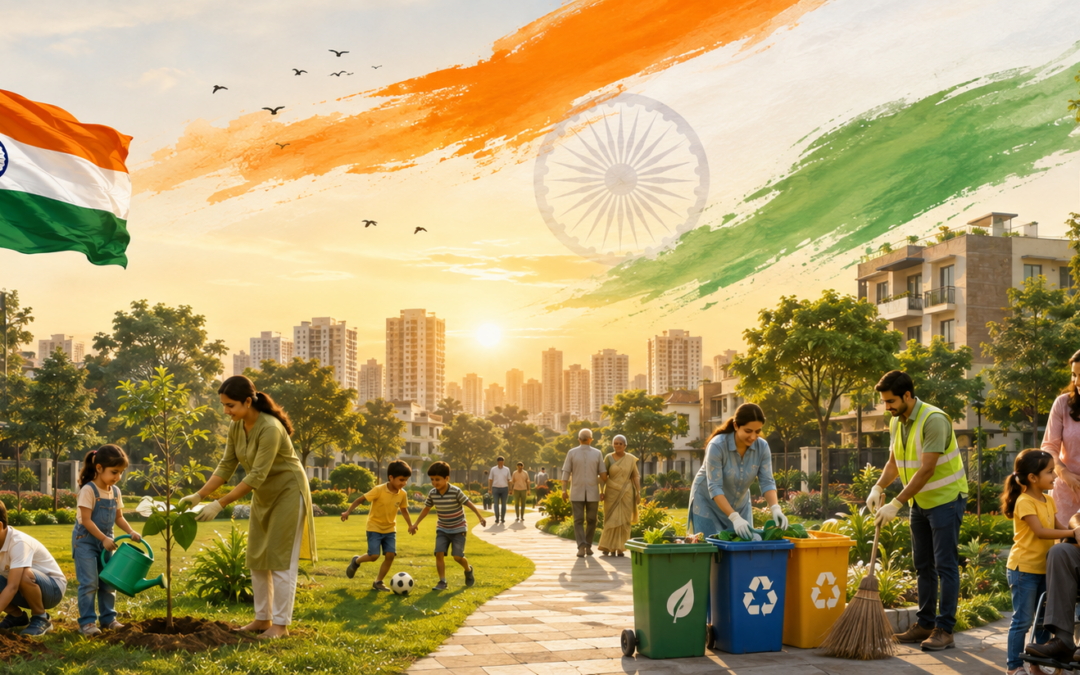
A good nation is built not only by its people and institutions, but also by the way we care for our homes, neighbourhoods and public spaces.”
Pointers for your speech
1. Our building is our shared responsibility
- A building does not remain good merely because it was well designed.
- Regular maintenance prevents small problems from becoming expensive repairs.
- Check water leakage, cracks, drainage, electrical systems, plumbing, lifts, fire safety and waterproofing regularly.
- Don’t wait for something to break—preventive maintenance is sustainable maintenance.
2. Keep water out—and use water wisely
- Repair leaking taps and pipes immediately.
- Keep terraces, balconies and rainwater outlets clean before and during the monsoon.
- Harvest rainwater wherever possible.
- Reuse suitable greywater for gardening and other non-potable purposes.
- Avoid wasting water while cleaning common areas.
3. Keep the building dry, clean and healthy
- Good ventilation and natural light are essential for healthy interiors.
- Prevent dampness and fungal growth.
- Don’t block windows, ventilation shafts or common corridors.
- Keep staircases and emergency exits clear.
4. Make the neighbourhood green
- Trees are not decoration—they provide shade, reduce heat, absorb rainwater, support biodiversity and improve air quality.
- Protect existing mature trees.
- Plant locally suitable species rather than planting only for appearance.
- Maintain soil and planting areas so rainwater can enter the ground.
5. Treat waste as a resource
A simple message for residents:
Reduce → Reuse → Repair → Recycle → Recover
- Segregate wet and dry waste at source.
- Compost organic waste where feasible.
- Avoid unnecessary single-use plastics.
- Don’t throw waste into drains, open spaces or vacant plots.
6. Make streets and common spaces pedestrian-friendly
A livable neighbourhood should allow people to:
- Walk safely.
- Sit and interact.
- Children to play safely.
- Elderly people to move comfortably.
- Persons with disabilities to access common facilities.
A neighbourhood is not only about buildings—it is about the spaces between buildings.
7. Think about safety and disasters
This would be a particularly strong point coming from your disaster-risk background.
Every resident should know:
- Where the fire exits are.
- Where the assembly point is.
- How to use basic fire-fighting equipment.
- What to do during floods, earthquakes, fire or other emergencies.
- Keep emergency routes and access roads unobstructed.
Preparedness is part of responsible citizenship.
8. Reduce energy consumption
Simple actions can make a difference:
- Use daylight wherever possible.
- Switch off lights and equipment when not required.
- Use energy-efficient lighting and appliances.
- Maintain ACs and other equipment properly.
- Use shading, trees and ventilation to reduce heat gain.
9. Respect common property
A very important neighbourhood message:
“What belongs to everyone must be cared for by everyone.”
Don’t damage:
- Lifts
- Staircases
- Gardens
- Benches
- Play areas
- Parking areas
- Signage
- Electrical and fire-safety equipment.
10. Build a culture of maintenance
You could end the practical section with five words:
Observe – Maintain – Repair – Reduce – Respect
Observe problems early.
Maintain regularly.
Repair before they become major.
Reduce waste and consumption.
Respect shared spaces.
A strong message for the occasion
You can connect this beautifully with Independence Day:
“When we hoist our national flag, we celebrate the freedom and responsibility that come with being citizens of this country. That responsibility does not end with voting or following laws. It also means taking care of the little piece of India around us—our home, our building, our street, our garden and our neighbourhood.”
“Let us not ask only, ‘What is my country doing for me?’ Let us also ask, ‘What am I doing to make my little corner of this country cleaner, safer, greener, healthier and more livable?’”